The shifting of our cultural landscapes often opens a fissure between what we know and what we can imagine. Familiar places, people, and narratives can be shaken down, pulled apart, and washed away before our eyes. Ripe and dripping with possibility, this transitional space offers itself to those willing to work the tender ground of an uncertain future.
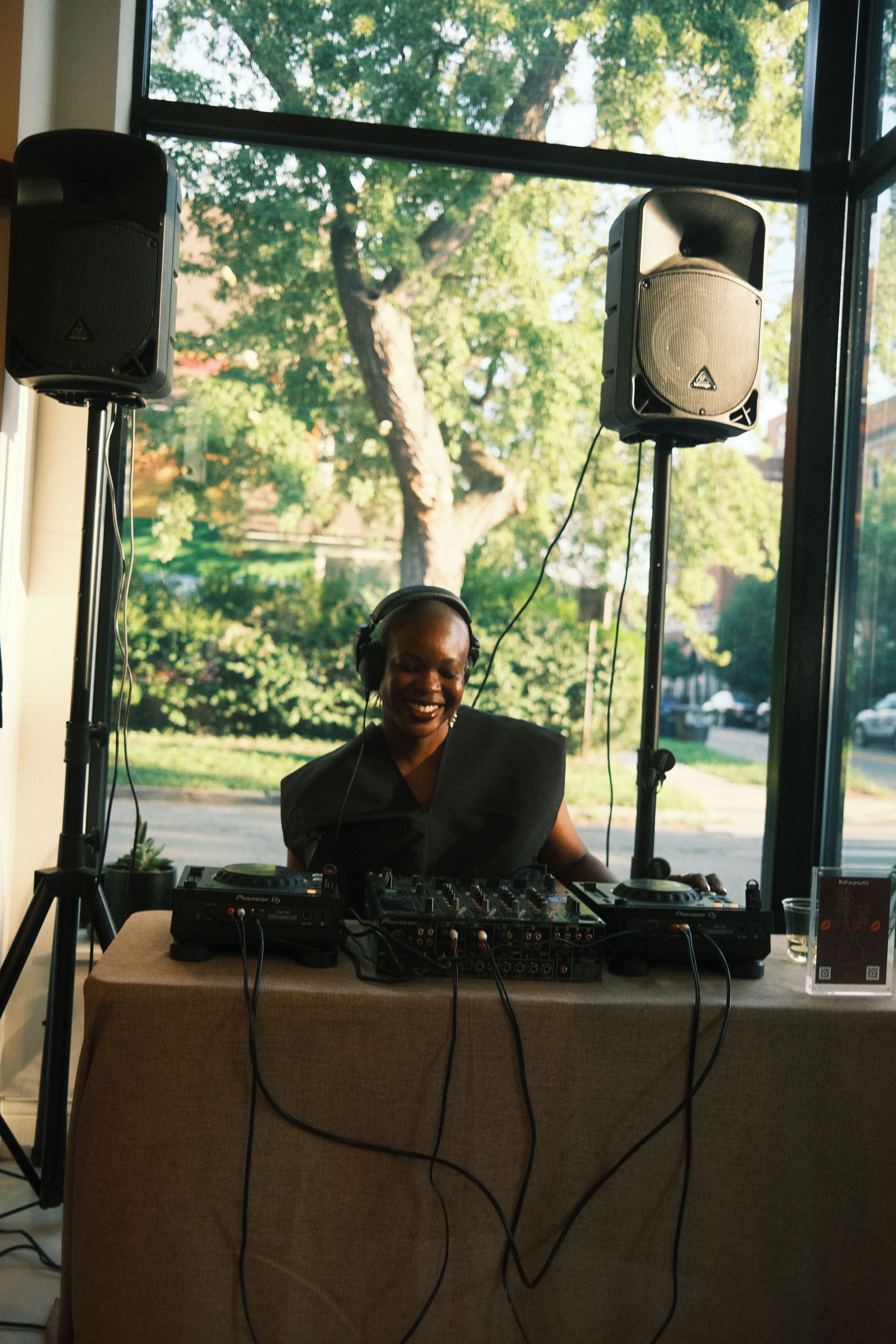
Born and raised in the city of Detroit, multidisciplinary artist KESSWA (Kesiena Wanogho) has cultivated a collaborative practice with a changing world. As a skilled weaver, hairstylist, and musician, her craft brings disparate matter into harmony. Inherited stories become supple threads in her hands, ready to be rewoven.
While KESSWA’s tools vary, the work consistently orbits her own body as the epicenter for knowledge production. She often reinterprets fragmented, archival narratives through technologies of pleasure and imagination. Time, place, and identity are approached as malleable and contested; Her future is spun from a recontextualized past.
In this conversation, KESSWA discusses the need for entangling fact and fiction, while holding open the gate to a more capacious and liberated world.
eugenie: Your practice moves across mediums and often resists easy categorization. You’ve described technology as a connecting thread in your work that extends before and beyond the digital. How do you understand technology as part of your practice?
KESSWA: My understanding of technology, as it applies to my practice, is that it is anything intended to be used as a tool. When I think about my work and the intentions behind my creative process, whether I’m creating a song, a performance, a hairstyle, or a tapestry, I see all of these works as tools created to serve a specific function: repair and healing. I draw not only from the etymology of the word “technology,” which derives from techne (art or craft) and logos (study), but also from Ruha Benjamin’s text Race After Technology, in which she writes, “Human toolmaking is not limited to the stone instruments of our early ancestors or to the sleek gadgets produced by the modern tech industry.”
For example, my 2019 EP, Soften, can be understood as a technology. Each song on the project was written with the intention of being performed to affirm myself through the creative process. At the time, I had not yet developed the confidence to believe I could cultivate a public-facing artistic practice, one that could ultimately improve quality of life. In this sense, the EP functioned as a tool for self-affirmation, helping me move toward the confidence and belief necessary to envision my artistic practice as a viable way of living.
eugenie: What rhythms and practices feel most nourishing to your creative process?
KESSWA: Currently, what nourishes me most is getting a good night's sleep, inviting friends and family over for drinks and small bites, taking long walks with my dog, watching YouTube documentaries, and collaborating with artist friends.
eugenie: Your work engages inherited lineages as spaces for collaboration and renegotiation. What kinds of histories or archives feel meaningful to work with?
KESSWA: I feel really excited about working with familial archives at the moment! More specifically, I'm interested in working with familial archives to explore the relationship between water, migration, and language; I’ll say more about that another time.
eugenie: The body seems to hold dual roles for you, acting as both the tool and the technician. How do you understand that relationship?
KESSWA: I think of the body itself as a technology; as a vocalist, my body is an instrument. It is very sensitive and intelligent beyond my comprehension. As a fine artist, I use my body, a technology, to become a technician, refining material, ideas, and constantly iterating.
eugenie: Performance and self-invention recur throughout your work. You inhabit different archetypes and characters, and your musical work specifically exists under a moniker. Can you speak to the role of autofiction in your work?
KESSWA: Yes. As a native Detroiter, I find that being based here calls me to confront past versions of myself that continue to exist in the world. I could be at the grocery store and run into someone who knew the twelve-year-old version of me, or the twenty-year-old Kes. At times, the memories that others hold of me can make me feel frozen in time, as though the world is much smaller than I remember.
Building worlds and imagining alternate timelines not only allows me to strengthen my own perspective, sense of self, and boundaries, but also stokes the flame of my imagination. That imaginative practice produces a kind of magic, one that allows my work to come alive.
eugenie: Clothing and adornment are prominent features in your performances. How do you think about what you wear, both within performance and in everyday life?
KESSWA: I think of clothing as a vocabulary that helps me articulate my sense of self. Getting dressed is a creative practice and a source of vitality for me, especially given my history with fiber as a hairstylist and weaver. The combination of textures, patterns, and colors I select to adorn my body speaks for me in ways I may not always feel compelled to translate for the uninitiated. I think of aesthetics as cultural markers and deeply appreciate artistry and craftsmanship, particularly the avant-garde.
When I’m on stage, knowing that I am dressed with intention and that my pleasure is at the center of that intention allows me to tap into my erotic and sensual nature. It gives me permission to resist holding back, overthinking, or self-editing, and instead remain present in the experience of performance.
eugenie: Your practice often moves between historical narratives and speculative storytelling. How do you navigate between the two, and what does that movement open up for you?
KESSWA: It opens up a physical space of possibility that I lovingly refer to as Alchemy. In my 2023 solo exhibition at the Museum of Contemporary Art Detroit, I used 360-degree video, performance, and recorded interviews to bridge past and future between Detroit and Wilmington, North Carolina. I asked women native to both cities to describe their versions of utopia and recall their most euphoric memories, while performers danced, biked, and lounged at historic and picturesque sites of Black resistance.
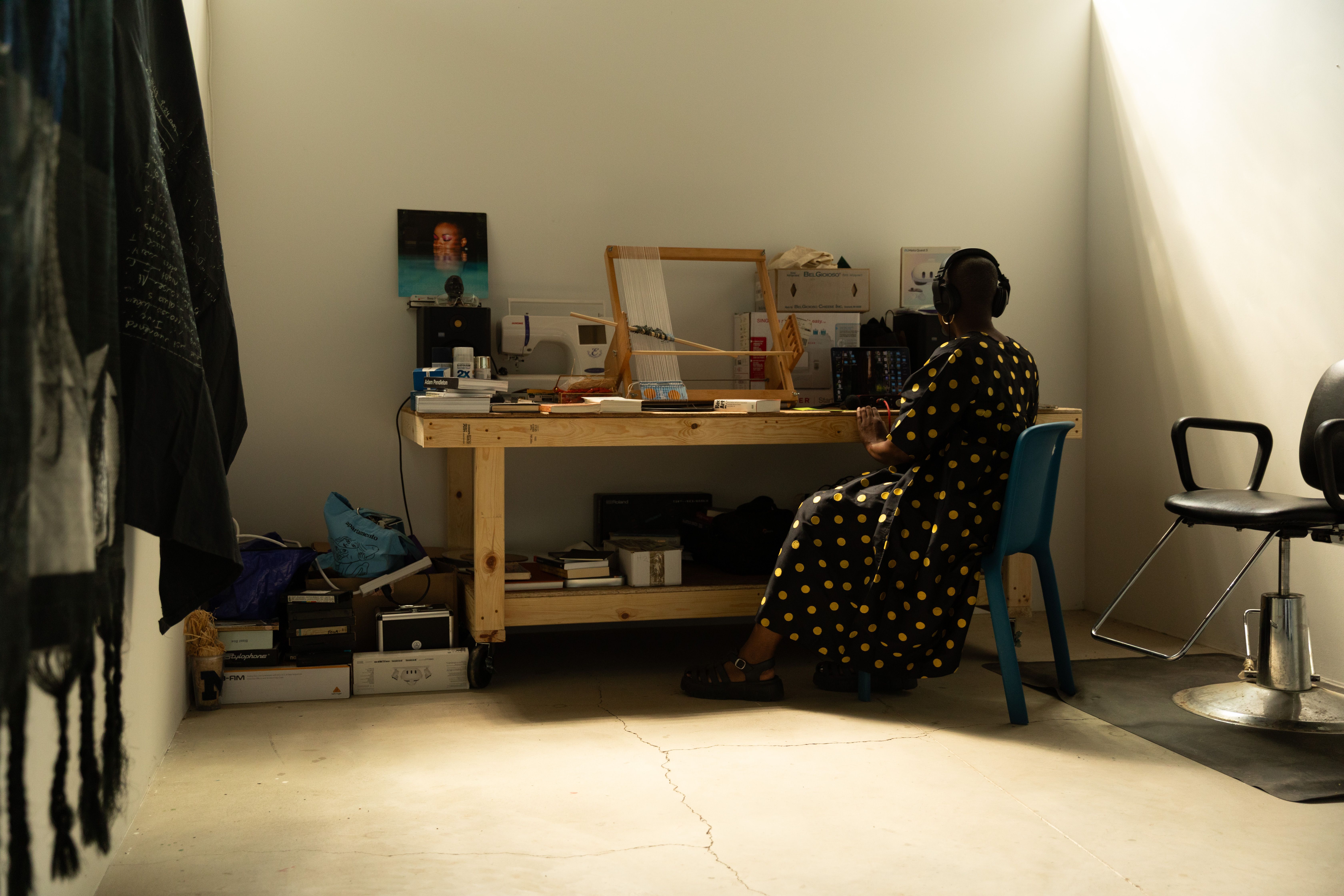
In my 2025 collaboration with Ian John Solomon, Co-Alchemy, we traveled to Pictured Rocks Falls to stage a hair-braiding ceremony at the base of the falls. We photographed and recorded the ceremony to explore the tension between the pressure to participate in cultures of covert surveillance and the preservation of the sacred. I later used those images as source material to hand-weave some of the tapestries you see in my studio today.
eugenie: You’ve said your work reaches toward imagined futures. What worlds are you hoping to make space for?
KESSWA: I am always hoping to make space for worlds that are capacious enough to hold the breadth of my being, including the parts I am still learning to honor.
Pick up a copy of the eugenie edit to read this feature in print.
Photographers: Shauna Grider, Michelle Potter
Wardrobe: eugenie