Alice James: On Roots and Restoration

Where we come from is knit together by a constellation of people, animals, plants, soil, stories—a textured weave of relations that form our sense of place and self. For Alice James, founder of About Face Detroit, place is both something we inherit and something we create. Placemaking happens in the space between where we come from and what we believe we can become.

Alice grew up on Detroit's east side, a place she left and returned to after decades away. Back on familiar soil, she found herself immersed in dense layers of historical context. Amid old stories and wilted promises, there were persistent signs of vibrancy: a thriving network of people dedicated to their homes, their blocks, and their neighborhood. Yet, despite the abundance of community care, this place bore the wear of time.

With her two daughters, Jade and Mina, Alice formed a nonprofit to respond to the needs around them. About Face Detroit was formed to cultivate beauty, dignity, and structural sustainability. With Alice as the visionary and her daughters as the hands, they brought the power of family to bear on the future of their community. Together, they now work to transform the soil, structures, and stories around them.

About Face Detroit turns neglected spaces into sites of devotion through home repair, urban gardening, and litter clean-ups. Each project layers into the next, modeling a placemaking practice that connects sustained relationships with sustainable restoration. In this conversation, Alice reflects on her roots and the collective power of community care.
Eugenie Detroit

eugenie: Alice, after decades away, you returned to the city to start About Face Detroit. What does it feel like to return as a steward, and how has that relationship to place changed over time?

Alice James: I didn’t just return as a steward. I wanted to be a part of Detroit’s rehab renaissance, particularly in the neighborhood where I grew up. That experience has taught me a lot about the reno process and, as it pertains to stewardship, it has also afforded me a hard lesson about the astronomical costs associated with maintaining Detroit’s old, tumbledown houses.

Equally impactful, as I began beautifying my home’s exterior, the feedback I received felt like a community’s palpable relief from dysfunction and neglect. Neighbors seemed hungry for not only practical improvements in our neighborhood but a manifestation of beauty too.

This is where my pivot began from self-interest to community interest. I’ve always been community minded, but community response to the work I was doing on my own home compelled me to roll up my sleeves and do even more.

Over time, my relationship to place has taken a back seat to how place serves the people who actually live there. I’ve learned to accept that one’s culture, family dynamics, financial circumstances, education, and fears lead us to different, equally valid dispositions and desires that may not reflect my own.

So stewarding, over time, has become a multidimensional approach that is informed by listening to my neighbors, observing other successful community stewards and leaning into my own lived experiences. Stewardship is partly also crafting effective communication that garners consensus and support. It’s personally demonstrating commitment to the work that brings us to the end goal. It’s being courageous enough to occasionally take risks, to boldly stand ten toes down on an initiative despite an indifferent or antagonistic chorus.

I notice that, unfortunately, sometimes apathy, cynicism and myopia can prevail in socio-economically insulated or marginalized communities. Similarly, myopia can plague high income communities too. Ultimately, my stewardship has evolved from merely working through my own good intentions to weaving that space into the dreams of my community.

eugenie: Your journey has followed a generative rhythm of leaving, learning, and returning. What have you gathered along the way, and what did it mean to bring that knowledge home?

Alice: I believe the last thirty-five years of my life have been the most transformative. I married, became a mom, moved to a foreign land that is conservative and white in small town TN. I went from being a blue collar daughter to squarely middle class, and along the way gained more exposure and access to all kinds of people.

Every time I returned to Detroit my head space felt a bit different. I felt less constrained by Detroit’s more oppressive narratives and themes. What I learned is that a narrative can be both true and also become a confining story to which we shackle ourselves. The rhythm of leaving, learning and returning has channeled me toward seeing different ways of being.

eugenie: About Face Detroit is built through a braided model of motherhood and sisterhood. How have you seen or felt familial support impact your work together?

Alice: On the one hand, we felt we could be more relaxed because we already knew each other’s intentions and personality, so launching AFD with my daughters went fairly smoothly. On the other, I realized two daughters plus mom does not necessarily translate into a well-oiled machine of coequals. For me, it meant that my bright, professional daughters would have certain industry standard ways of doing things that would be non-negotiable. I had to compromise there.

We are finally gelling now, and pretty much discovered the roles where we best operate and where we generally stay put. Jade is our administrative, “back of office”. Civil engineer, Mina, is our city personnel and contractor whisperer (anybody who has ever worked with City knows what I mean). And I’m the visionary mule. I’m street cleaner, errand boy, earth mover and resident dreamer all rolled into one.

eugenie: In an interview with the City of Detroit, your organization described its work here on the east side as a form of placemaking. What does placemaking look like in practice?

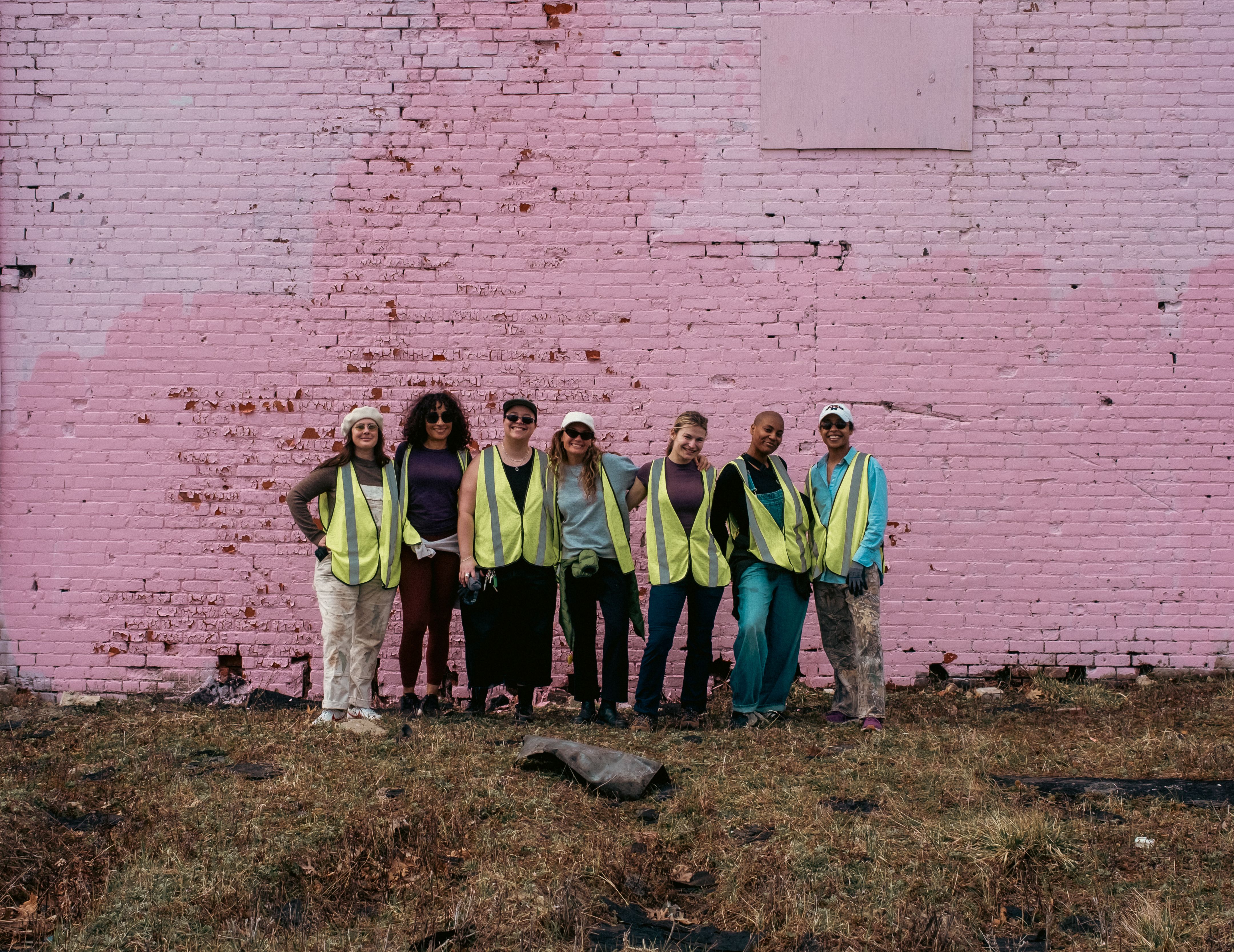
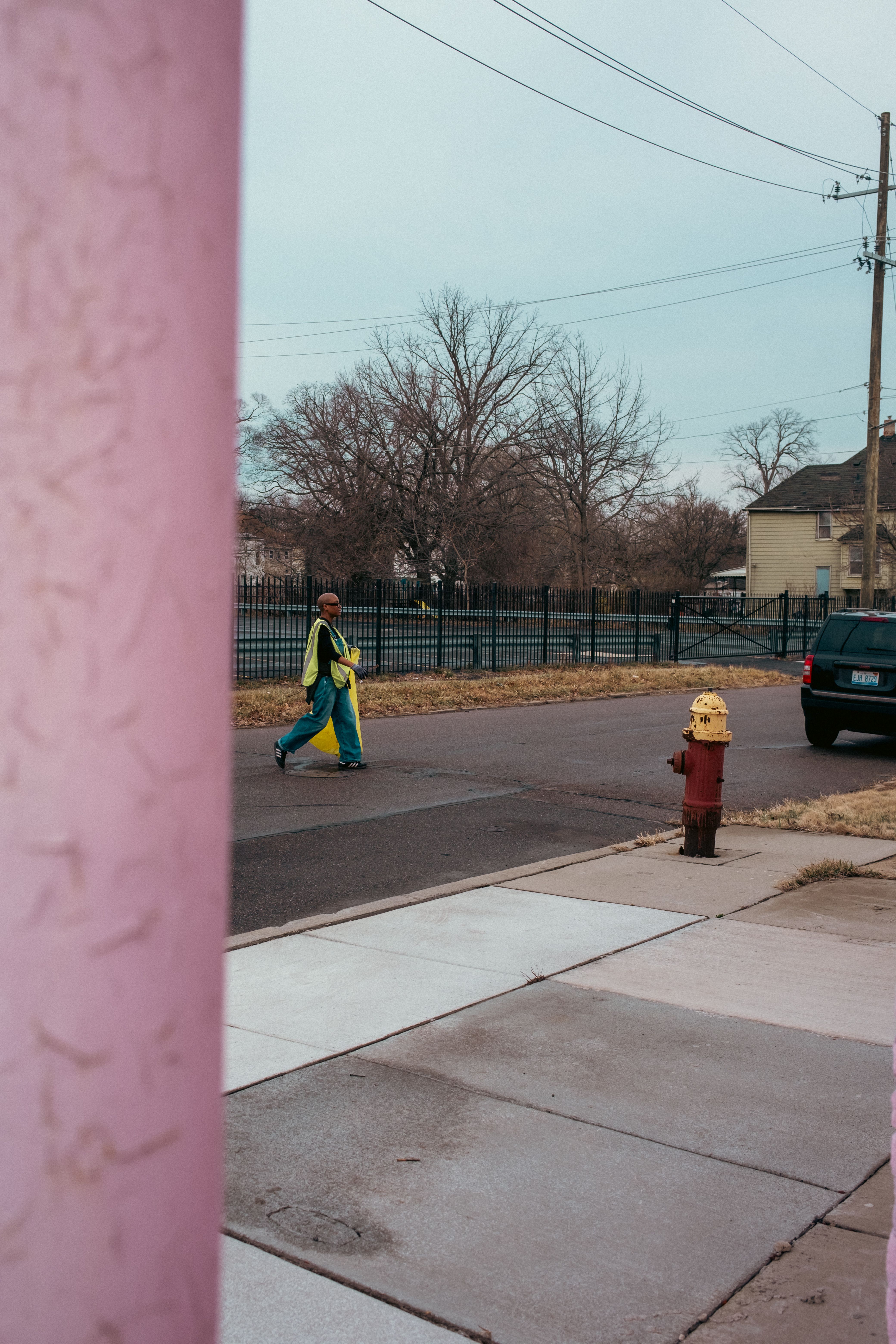
Alice: One of our initiatives entails weekly clean-ups along East Village’s major corridors. Besides the obvious reason for this work, it also allows me the opportunity to engage with my neighbors and to observe how they inhabit their surrounding space.

What I noticed is that the men who frequent local stores will often congregate and socialize standing in front of them. Or they might be seen seated on plywood atop an overturned pot. Empty bottles might be left in a neat nearby pile. Is it too much to recognize these men as respected patrons by providing a modest gathering place with a nearby trash can, bench, a little shade, and even a table? These seem to me to be rather basic amenities that would create a place for them to enjoy with dignity. Men with deeper pockets go to bars where they drink and are well accommodated, so this ask might be extraordinary only in the context of believing that certain people don’t deserve consideration.

For me, community placemaking (as opposed to placemaking downtown, say) is the practice of layering into public space functionality, programming, beauty and culture that should be tailored to the people who live there. It’s often about meeting people where they are. A soundly developed place takes time. It starts with a core design based in community need and desire, and it evolves over time according to usage, organic design, occasional break-out ideas and the ebb and flow of demographics. A well designed place should become where the community wants to return again and again.

Eugenie Detroit

eugenie: Your work moves between homes, land, and relationships. In what ways has this cross-disciplinary method brought you into dialogue with the earth itself?

Alice: My observation is that, as humans in an urban landscape, we have learned to dismiss our undeniably necessary connection to earth: we live in homes that protect us from earth; we traverse earth in tiny metal rooms on wheels; we go to stores and spaces where we purchase packaged fuel for our body and mind. In almost every way we exist we are always at least slightly disconnected from earth. Even the outdoor sidewalks are a barrier between us. Technology has protected us from the harsh whims of nature and has been a boon to our survivability.

At the same time, that disconnect from earth has had its deleterious effects, too. It has trained us to always seek domination and distance first, instead of harmony. I believe our antagonistic relationship with earth makes us inclined to disregard its limitations and blind us to the fact that earth is no longer able to absorb our ignorant recklessness and decadence.

So, now we are in the phase of reimagining Detroit with all this … earth. I feel that however we landed in our latest Detroit iteration of a thousand million open tracts of earth, this could be our lemonade moment. This could be a moment where we have a new ongoing dialogue with earth rather than try only to shield ourselves from it as though it were the enemy.

Urban gardens not only provide fresh food but remind us that we need healthy earth to survive. Farming, the labor of putting hands to soil and reaping what sustains us, engenders respect and awakens in us all the need for dedicated stewardship. Green spaces ensure less traffic and therefore a quieter and calmer environment, allowing us to hear nature and each other sharing our day on a park bench. Quiet, in and of itself, creates sanctuary. Unlike honking, speeding cars and sirens, a rush of breeze through trees soothes.

Public green spaces may also naturally protects us from harsh sun rays and cold, and they welcome us without the need for permission and onerous propriety. We are gentler outdoors. Almost everybody smile-checks a passerby on a sunny day, which is not something you usually get at the mall,say. Native plants, instead of labor intensive, water chugging and chemical dependent lawns, ensure we maintain a healthier and more sustainable environment. Trees and shrubs are easier on the eye than man-made constructs.

Instead of homes that arrogantly parade along our curbs, I’d love to see developers set back newly constructed homes so that front yards look more like forests in which homes are nestled. Homes, relationship and land require a balancing act with earth, not apart from or in spite of. It’s a forever endeavor.

eugenie: The transformation of our neighborhoods often emerges from collective, grass-roots efforts. What does intergenerational collaboration look like in the neighborhoods you serve?

Alice: I am always encouraged by how other communities and NPOs offer support to AFD in any way they can. It’s right up there with funding that puts the wind in our sails.

However, regarding where we might find intergenerational collaboration i.e. within our community, I am less sanguine. Here, among the mostly older long-time residents, I hardly experience any material support at all. I never begrudge our neighbors’ expression of gratitude. We appreciate and need it. Gratitude proves AFD is moving in the right direction. Still, I did expect a greater base-line level of tangible support.

Lately, I have come to a number of sympathetic reasons for this underwhelming support, but AFD is working toward turning that around. Sometimes a beleaguered community just needs a jump start to get it up and running. Otherwise, what I have noted is that old heads are more willing to go through the tedious bureaucratic work that might be required for change, whereas younger neighbors often have the will and energy for hard labor, hype and fundraising.

Eugenie Detroit

eugenie: Can you share a specific project that felt especially meaningful?

Alice: We formed this NPO with the principal mission of home repair. In fact, we plan to complete a major renovation of our neighbor’s home this spring. Beyond that, we’ve collaborated and fund raised for porch repair, stucco repair, paint, landscaping projects, commercial trash can purchases, lot clean up, an urban garden, sidewalk restoration and tree planting. We are also looking toward two placemaking projects on Vernor and Mack.

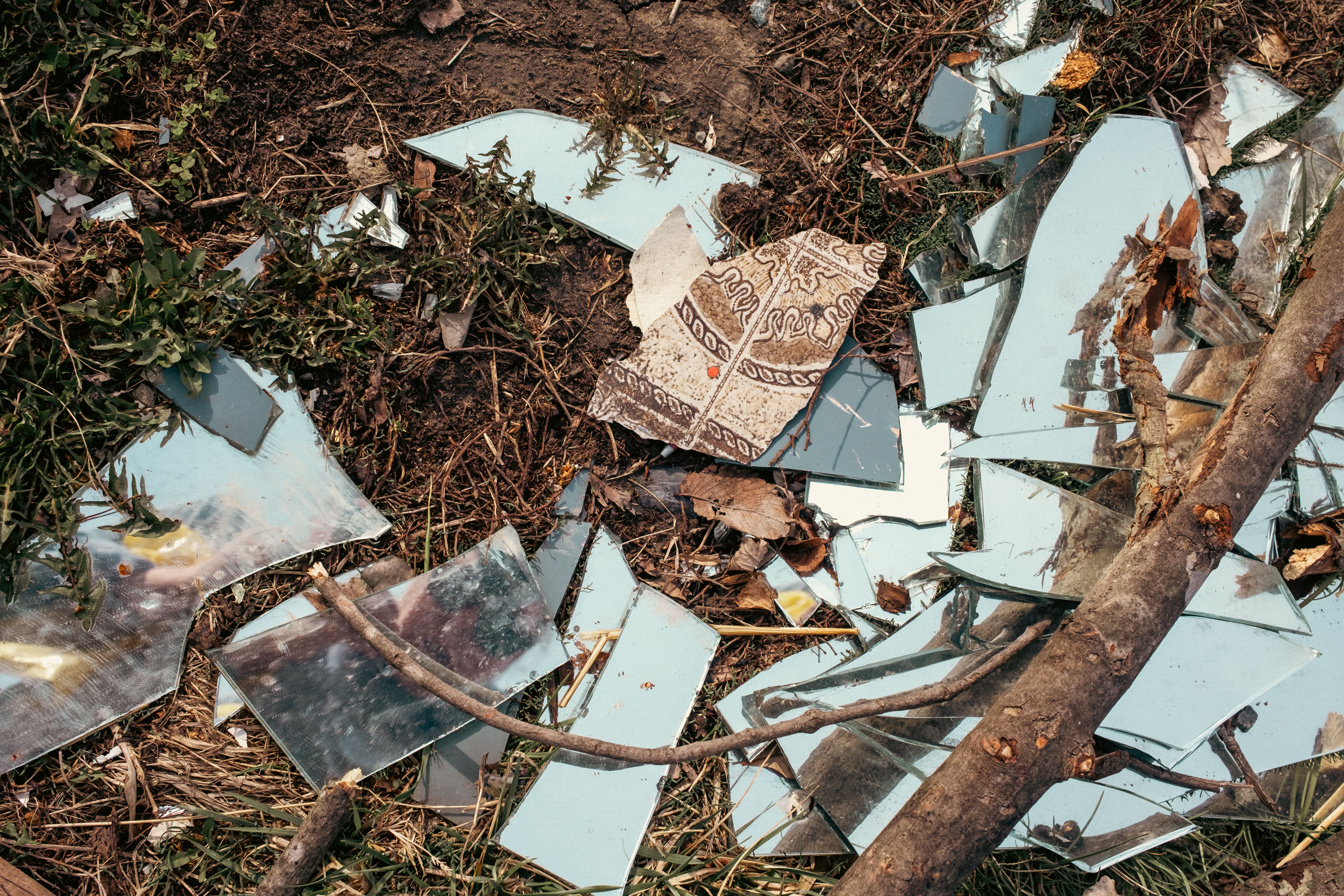
But honestly, the work that I’m most proud of is our anti-litter campaign. It’s been three years since we began this initiative where 2-3 times a week I would go out and pick up garbage along Mack, Vernor and Charlevoix.

Last year, only a once a week clean up was required. I don’t pick up in winter, of course, and every spring the melted snow reveals virtual dump sites in the open lots along Mack. But today, driving down Mack almost brought me to tears. Hardly any trash at all, even with all of the wind. I kept believing that if the community saw our dedication to beautifying our community, neighbors would eventually respond in kind.

The AFD anti-litter initiative demonstrates that a community doesn’t necessarily need tremendous funding for significant improvement.

eugenie: Part of your work involves structural repair to homes, but your projects also demonstrate a clear attention to beauty. Do you consider beauty important to restoration work?

Alice: Love this question. I know functionality is a primary goal, but somewhere along the way, at least as it pertains to our Eastside community, somebody up there gave the middle finger to beauty.

An AFD motto is, “We deserve beauty too”. Beauty nurtures dignity and pride. It lets our community know that we are seen and valued, which in turn elicits a type of response commensurate with the beauty that was bestowed. It is human to want to personally invest in uplifting a community that appears investable.

The psychological boost to driving to a home that you are proud of, of driving past homes that are not only safe and sound but bespeak care, of being surrounded by thriving businesses with manicured store fronts and seeing neighbors joyfully gather in green spaces is incalculable, and positively redounds to society in a myriad ways.

So, yes, beauty is definitely an initiative of “AboutFace” Detroit.

eugenie: Aesthetics and empowerment often go hand-in-hand. What particular pieces of clothing or ways of dressing help you feel grounded or empowered?

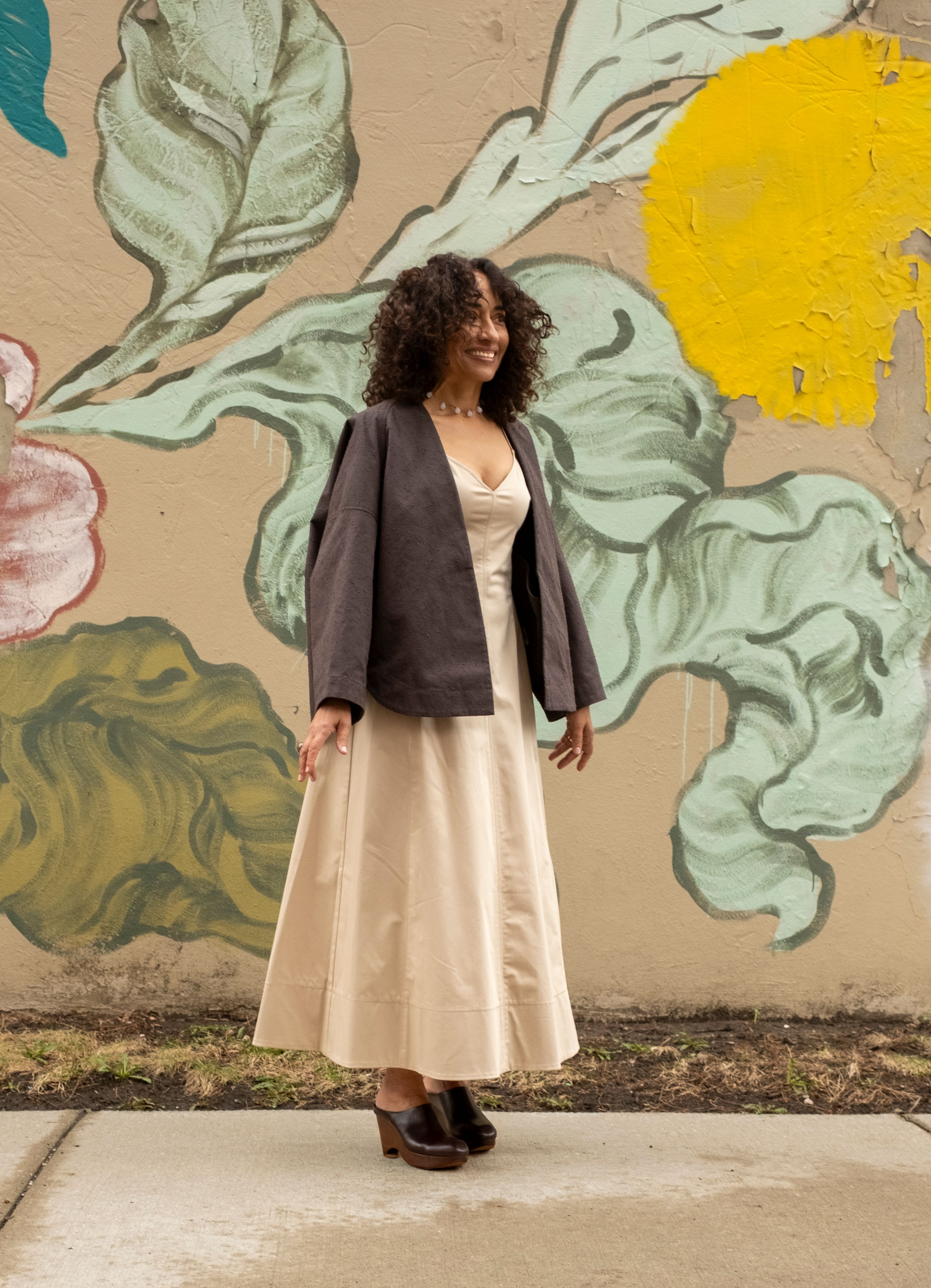
Alice: I’ve gone through various clothing style phases throughout my life. But for me, first and foremost, great style entails fitness: agility, a comfortable weight, adequate rest, happy skin, and of course a balanced mind. If all those levels are right I feel empowered. But my favorite clothing fits are comfortable and sleek, like a pair of slacks, a fitted tee, sneaks and a luxe ankle length wool swing coat a la Max Mara. Love a chunky ring too. I have no time for fancy purse swapping. Always the backpack for me.

eugenie: We’re incredibly grateful to be in partnership with About Face Detroit for Earth Day and Mother's Day! Are there any designers, objects, or brands in our shop that resonate with you?

Alice: I love eugenie. I love the feminine, yet modern simple lines that are offered. But what I love most of all at eugenie is that bespoke sofa, so much so that I sourced it. I guess eugenie just got it like that.

Jade, Mina and I are so grateful to eugenie for spotlighting our tiny NPO. Every bit of publicity creates more potential for much needed support. And we had a great experience collaborating with you on a neighborhood clean-up for Earth Day!

Eugenie Detroit